UNIFYING THE VOICES OF HYDROPOWER
The Role of Flexibility and Storage at ENLIT EUROPE 2025
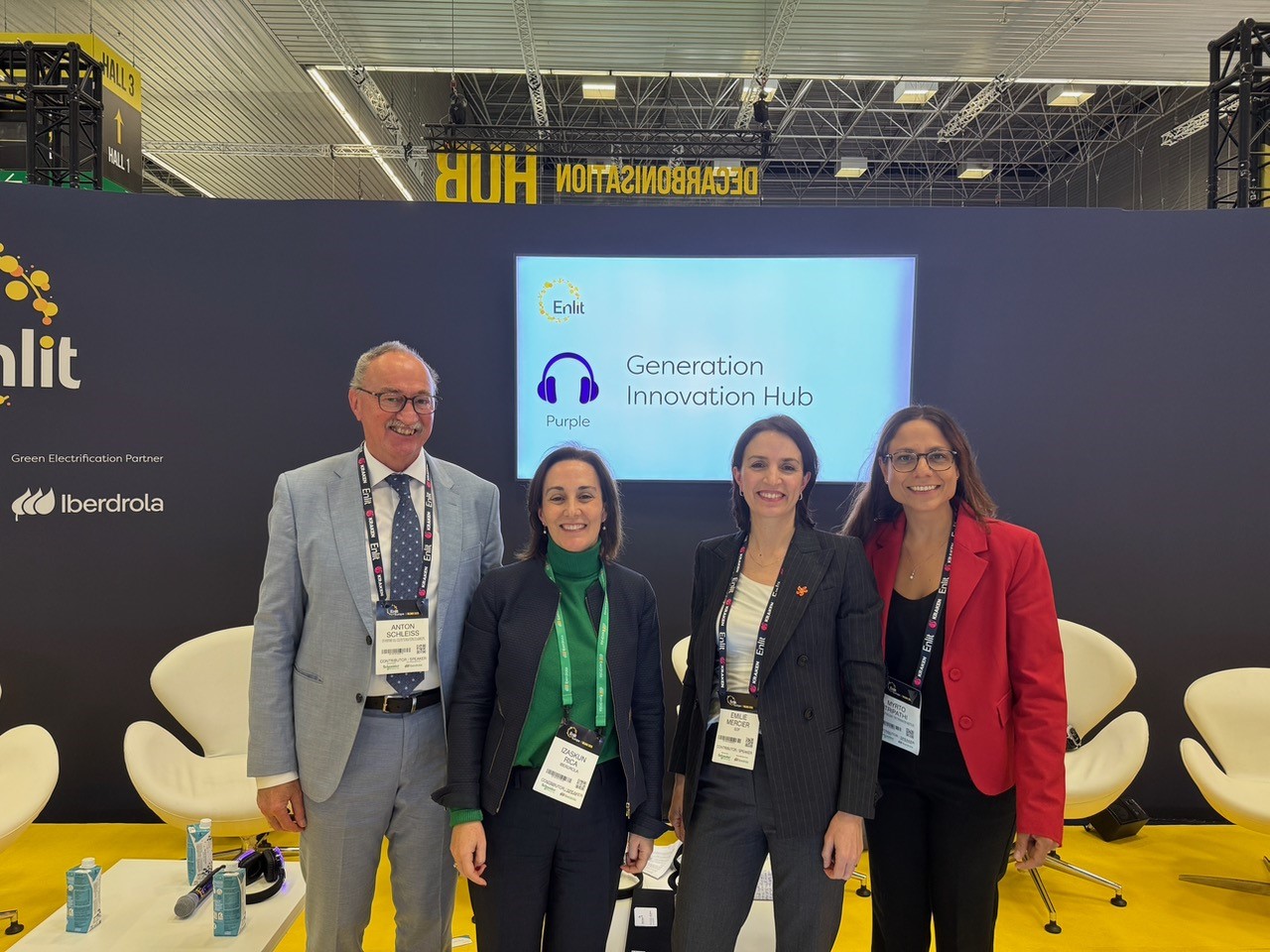
Hydropower took center stage at this year’s ENLIT EUROPE in Bilbao, Spain, where a dedicated session in the Generation Hub "Hydropower Projects & Innovation: From showpiece pump storage projects to modernisation" which highlighted the sector’s crucial role in Europe’s evolving energy landscape.
Representing ETIP HYDROPOWER, Prof. Anton Schleiss delivered a keynote presentation titled Hydropower flexibility and storage as a catalyst for a successful energy transition. He began with an overview of ETIP HYDROPOWER’s mission and activities, emphasizing the platform’s work to drive innovation and collaboration across the hydropower community.
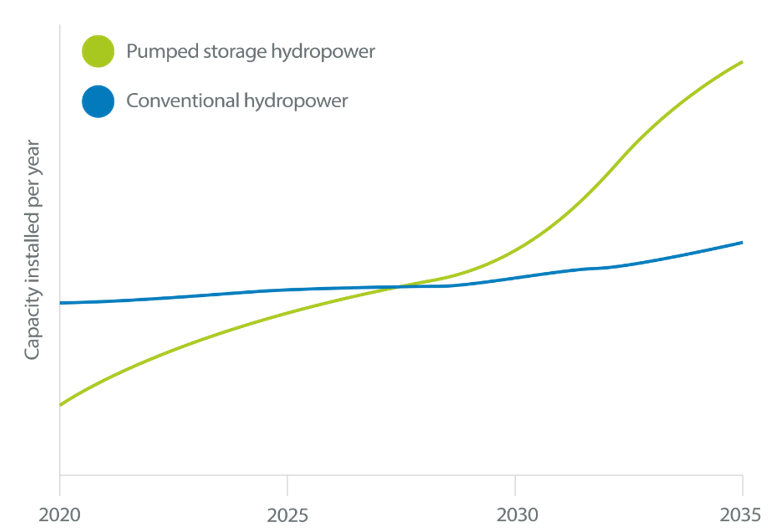
Prof. Schleiss underscored how recent events (notably the 2022 energy crisis and the 2025 blackout in Spain) have demonstrated the indispensable role of hydropower in ensuring Europe’s secure and resilient electricity supply. He stressed that the modernisation and extension of existing hydropower plants, along with the development of new pumped-storage facilities, are becoming increasingly attractive and necessary investments to meet flexibility and storage needs.
Drawing on insights from ETIP HYDROPOWER’s Working Group on Flexibility, Prof. Schleiss referenced the group’s White Paper and explanatory video, which together illustrate how hydropower can act as a cornerstone of Europe’s clean and reliable energy transition.
The session, chaired and moderated by Myrto Tripathi, General Director of Terrawater Institute, featured additional perspectives from leading industry figures. Izaskun Rica Ugarte, Hydropower Electrical Engineering Manager at Iberdrola, discussed advances in pumped-storage hydropower, while Emilie-Marie Mercier, R&D European Projects Director at EDF, presented Hydropower for a Competitive Europe: The Value of EU Funding and R&I, highlighting the importance of research, innovation, and European cooperation in maintaining hydropower’s competitiveness.
Towards Nature-Positive Hydropower: ETIP HYDROPOWER Publishes Three Biodiversity White Papers
Brussels, 20 November 2025 — ETIP HYDROPOWER released last thursday 20th November three new White Papers dedicated to biodiversity, focusing on some of the most relevant interactions between hydropower operations and river ecosystems: fish mobility, environmental flows and hydropeaking, and sediment dynamics. Developed by experts from Working Group 2, the series compiles state-of-the-art knowledge, European practices, and recommendations to support hydropower operators, researchers, and policy makers in advancing environmentally sustainable hydropower. White Paper on Enabling Fish Mobility at Hydropower PlantsThis paper highlights the role of fish migration in maintaining river connectivity and biodiversity. It reviews current technologies and solutions to improve upstream and downstream passage, including nature-like and technical fishways, fish lifts, bypass systems, behavioural guidance structures, and fish-friendly turbines. It stresses the need for:
Download the White Paper on Fish Mobility White Paper on Environmental Flows and HydropeakingThis paper explores how environmental flows (E-flows) and hydropeaking management can reconcile river ecosystem needs with flexible hydropower production. It summarises methodologies applied across Europe (from hydrological and habitat-based to integrative approaches) and provides guidance for their implementation. Key recommendations include:
Download the White Paper on E-flow and Hydropeaking White Paper on Sediment DynamicsSediment transport is essential to river morphology, habitats, and infrastructure resilience. This White Paper explains how hydropower operations alter sediment continuity and outlines a comprehensive set of management measures to address it: such as sediment flushing, sluicing, venting, bypassing, replenishment, and dredging. Its main messages include:
Download the White Paper on Sediment Dynamics Together, the three White Papers illustrate practical ways to achieve “win-win” solutions between hydropower operation and river ecology. They provide knowledge that supports the objectives of the EU Water Framework Directive, the Nature Restoration Regulation, and the Renewable Energy Directive (RED III), contributing to Europe’s broader goals for a climate-resilient and nature-positive energy transition. |
ETIP HYDROPOWER at AQUAWATT Forum: Uniting Europe’s Hydropower voices for a Sustainable Energy FuturePiacenza, Italy — 30 November 2025. At the AQUAWATT Forum, a workshop titled “ETIP HYDROPOWER: Shaping the Future of Sustainable Hydropower in Europe” presented the European Technology and Innovation Platform on Hydropower (ETIP HYDROPOWER) to stakeholders from industry, research, and policy. Hydropower remains a vital component of Europe’s clean energy transition, providing flexible, reliable, and renewable electricity. The workshop underscored how ETIP HYDROPOWER is designed to unify the sector’s voice, promote innovation and sustainability, and align strategic actions with EU climate and energy objectives. Platform mission and governanceAntonella Frigerio, Vice Director at RSE and Co-Chair of the ETIP HYDROPOWER Governing Board, opened the session by outlining the platform’s mission, structure, and strategic priorities. She emphasised the need to reposition hydropower as a central pillar of the European Green Deal—able to deliver flexibility, storage, and climate resilience. Frigerio also highlighted the importance of Research and Innovation Agendas (RIA) and the Strategic Industrial Roadmap (SIR) to guide future developments, and called for stronger recognition of hydropower within EU policy frameworks. Sector challenges and recommended actionsJean-Jacques Fry, representing the ETIP HYDROPOWER Secretariat, identified three priority challenges for scaling hydropower deployment across Europe:
To address these, Fry recommended:
Preview of ETIP HYDROPOWER White PapersThe workshop also served as the exclusive preview of the ETIP HYDROPOWER White Papers developed by the platform’s Working Groups:
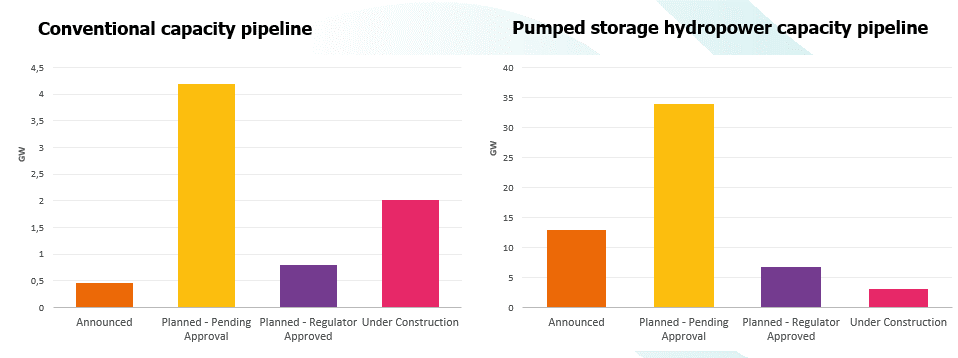
In addition, a short video on hydropower’s flexibility potential was premiered, showcasing real-world examples of how hydropower assets across Europe are supporting the integration of variable renewables and enhancing system reliability. World Hydropower Outlook 2025Matteo Bianciotto of the International Hydropower Association (IHA) presented insights from the World Hydropower Outlook 2025, including:
Policy momentum: the Paris PledgeBianciotto also introduced the Paris Pledge, a declaration signed by more than 50 European stakeholders calling for:
The pledge was formally presented to the European Commission in Brussels on 11 September 2025, reinforcing the sector’s commitment to a resilient and decarbonised energy system. |
ETIP HYDROPOWER Contributes to Key Discussions at HYDRO 2025 The HYDRO 2025 Conference in Thessaloniki, Greece (22-24 October 2025), brought together over 1,000 participants to discuss innovation from almost 70 countries, to discuss topics ranging from dam safety and environmental management to climate resilience, artificial intelligence applications, and the growing role of pumped storage in renewable energy integration. Anton Schleiss, Coordinator of ETIP HYDROPOWER, chaired the session on European initiatives supporting hydropower, where five presentations showcased the results of ongoing EU-funded R&I projects. Schleiss also lectured at the pre-conference workshop on pumped storage hydropower, presented the latest achievements of ETIP HYDROPOWER at the IEA Hydro TCP Executive Committee Meeting, joined a World Bank–led roundtable on sedimentation management, and delivered a technical talk on piano key weirs and wooden debris impacts in the Gates and Spillways session. Denis Aelbrecht, Chair of the ETIP HYDROPOWER Governing Board, chaired the session on Climate change – risk and resilience, while Emanuele Quaranta, Chair of the Working Group on Promotion, Dissemination and Uptake of European R&I Projects, contributed to the Small Hydro session with a presentation on the potential and opportunities for small hydropower in the European Union and the role of emerging policies. He also introduced the European initiatives supporting hydropower session with reflections on how excellence in science and industrial innovation can jointly strengthen Europe’s hydropower sector and policy impact. During the event, Anton Schleiss, Denis Aelbrecht, and Emanuele Quaranta met with representatives of the European Commission’s DG International Partnerships (Pau Guix Ruiz and Michel Caubet) to discuss ongoing initiatives under the Global Gateway strategy, exploring opportunities to promote public–private hydropower projects worldwide with European sector involvement. Several other ETIP HYDROPOWER members contributed to the programme, including Sera Lazaridou and Klaus Jorde (Governing Board members) as well as Atle Harby, Cécile Munch Alligné, Luc Deroo, and Miroslav Marence (Scientific Advisory Board members). Through active participation at HYDRO 2025, ETIP HYDROPOWER highlighted its continued efforts to develop sustainable hydropower solutions and to connect scientific, industrial, and policy perspectives across Europe. |